Private Jet Charter Costs in Europe 2026: Aircraft Pricing, Routes & Fees
In 2026, the average private jet charter cost in Europe ranges from €2,500 per hour for a Very Light Jet to over €15,000 per hour for a Heavy Jet. Total trip prices are determined by the specific aircraft type, flight duration, local luxury taxes, and mandatory European fees such as landing charges.
Do you find yourself comparing vague “starting from” prices only to receive a final quote that looks nothing like the estimate? You are not alone. Navigating European private aviation costs in 2026 requires transparency and up-to-date market intelligence.
In this guide, we promise to pull back the curtain on the industry’s pricing secrets. From hourly rates to the “hidden” impact of the latest environmental taxes, we provide the financial clarity you need to budget for your next mission with absolute confidence.
The Foundation: Hourly Rates by Aircraft Category
The core of any charter quote is the hourly rate. This is the baseline fee for the aircraft’s time in the air. However, it is a mistake to view this as a static number. In 2026, hourly rates are influenced by the aircraft’s type, age, its fuel efficiency, and its maintenance cycle.
Why Do Hourly Rates Differ?
When you pay for an hour of flight, you aren’t just paying for fuel. You are contributing to:
- Maintenance Reserves: Every hour flown brings the engines closer to a multi-million euro overhaul.
- Crew Salaries & Training: In 2026, the global pilot shortage has driven up wages for type-rated captains.
- Insurance: Higher premiums for modern, high-value airframes.
- Landing & Handling Fees: Hourly rates often reflect the varying landing and handling fees associated with different aircraft weights and categories.
| Aircraft Category | Pax | Typical Range | Est. Hourly Rate (2026) |
| Turboprops (e.g., Pilatus PC-12) | 6–8 | 2,500 km | €1,900 – €2,700 |
| Very Light Jets (e.g., Phenom 100) | 4–5 | 2,100 km | €2,600 – €3,400 |
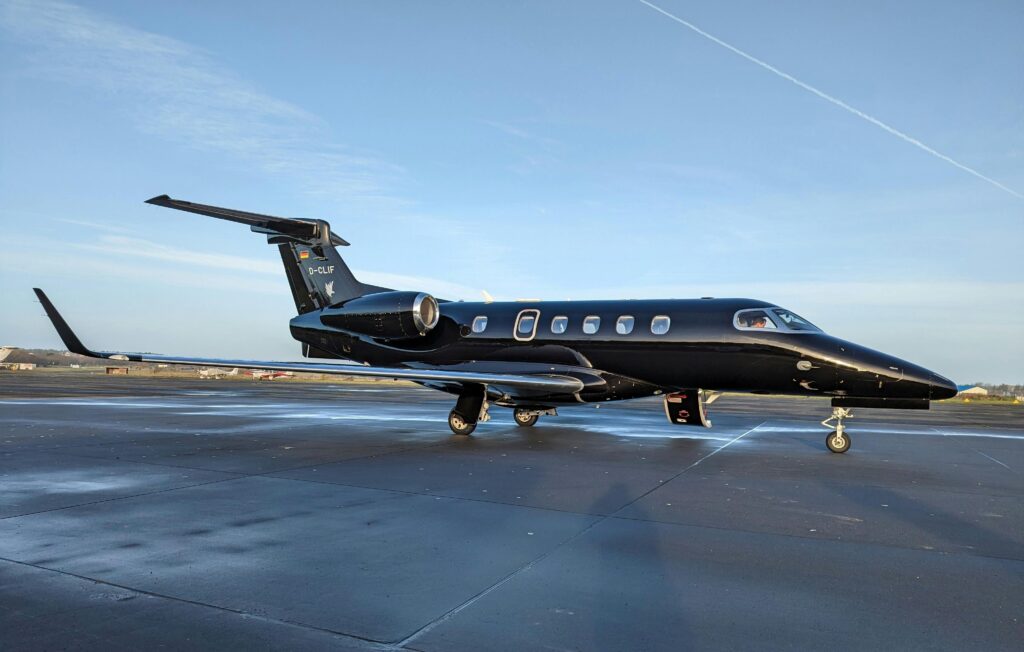
| Light Jets (e.g., Phenom 300E) | 6–7 | 3,100 km | €3,200 – €4,500 |
| Midsize Jets (e.g., Citation XLS+) | 7–9 | 3,800 km | €4,800 – €6,500 |
| Super-Midsize Jets (e.g., Praetor 600) | 8–10 | 6,200 km | €6,500 – €9,000 |
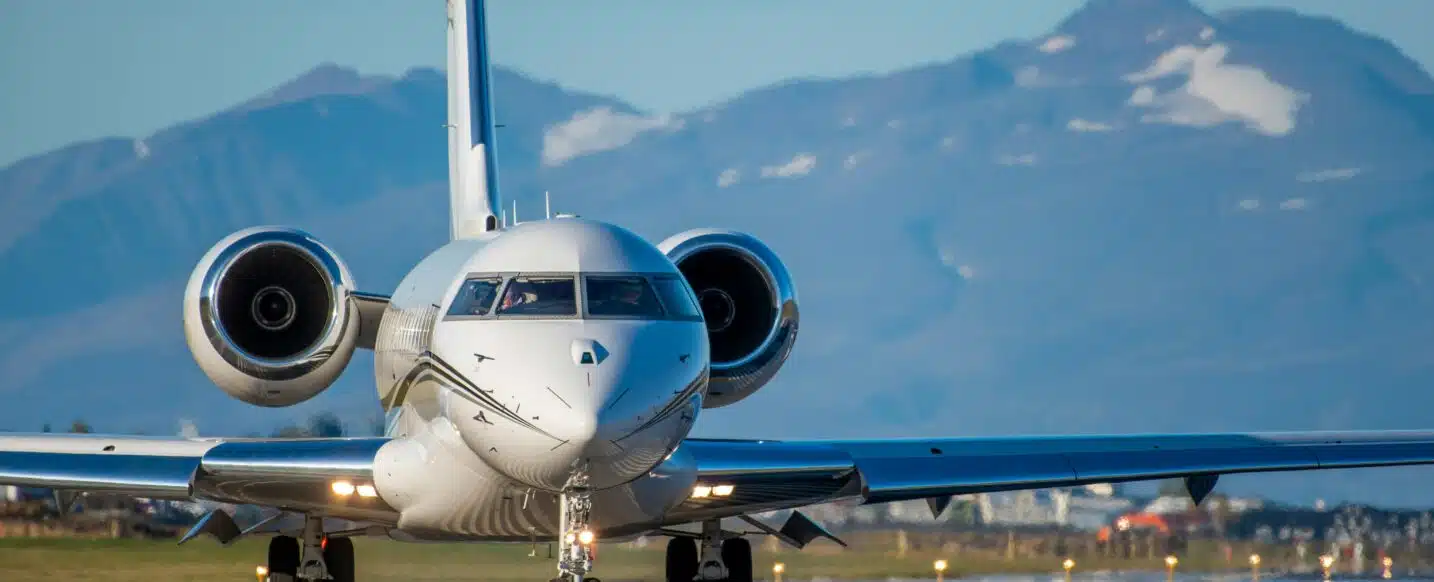
| Heavy Jets (e.g., Global 7500 / G650) | 12–16 | 13,000+ km | €10,000 – €18,000 |
| VIP Airliners (e.g., BBJ / ACJ320) | 19–50+ | 11,000+ km | €25,000 – €35,000+ |
Deep Dive: The Efficiency of Light and Midsize Jets
For over 80% of European missions, a Light or Midsize jet is the most logical choice. These categories offer the perfect balance between cabin comfort and operational flexibility.
The Light Jet Advantage (e.g., Phenom 300E, Cessna CJ3+)
Light jets are the “Swiss Army Knives” of the sky. In 2026, they are favored for their ability to land on shorter runways, such as London City (LCY) or Cannes (LFMD), which are often restricted for larger aircraft.
- Operational Cost: Lower landing and handling fees compared to heavier categories.
- Speed: Modern Light Jets cruise at speeds comparable to larger aircraft on routes under 3 hours.
- Best For: Regional European hops, executive day-trips, and small family groups.
The Midsize Jet Standard (e.g., Citation XLS+, Praetor 500)
The Midsize category is defined by the “Stand-up Cabin.” In 2026, this segment has seen a surge in demand as corporate flight departments move away from the “luxury” perception of heavy jets toward the “utility” of Midsize airframes.
- Amenities: Full refreshment centers, enclosed lavatories, and often a flight attendant (upon request).
- Payload: Greater capacity for luggage and golf sets compared to Light Jets.
- Best For: Cross-continental routes (e.g., London to Athens) and groups requiring extra space for onboard productivity.
In-Flight Dining: Managing Expectations in 2026
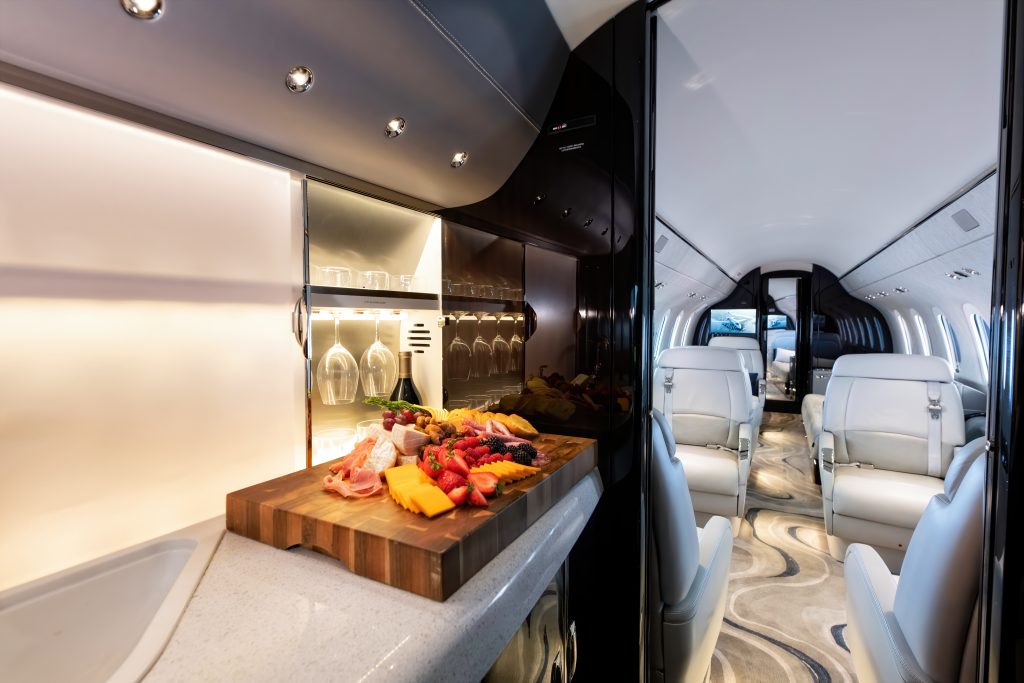
Beyond cabin size, a common point of confusion for charter clients is the level of catering included in the base price. While private aviation offers ultimate flexibility, the standard service depends on the aircraft’s galley facilities.
- Light Jets (e.g., Phenom 300, CJ3): Due to limited space and the absence of a flight attendant, catering on these flights is typically limited to premium pre-packaged snacks and a full selection of beverages.
- Midsize & Heavy Jets: These categories offer more room for fresh “buffet-style” options. You can generally expect a variety of gourmet sandwiches, wraps, or seasonal salads prepared fresh for your departure.
- Bespoke Dining (Sushi & Hot Meals): If you require specific cuisine—such as fresh sushi, multi-course hot meals, or specific dietary requirements—this is available across all aircraft categories, from Light to Heavy jets, upon request.
Mandatory Surcharge: It is important to note that all bespoke dining requests, including sushi and hot meals, incur additional costs above the standard charter price. These fees cover the specialized procurement, preparation, and delivery to the aircraft. Furthermore, for hot food on a Light Jet, our team must verify if the aircraft is equipped with the necessary heating facilities.
Real-World Route Benchmarks (2026 Estimates)
Total trip prices depend on flight paths and airport-specific fees. Below are estimates for the most requested European corridors, including the Heavy Jet category for larger groups and long-range comfort.
London (Biggin Hill) to Nice (Côte d’Azur)
The “Classic Summer Route.” Nice is the second busiest private jet hub in Europe.
- Light Jet (4-7 pax): From €7,100 (One-way estimate)
- Midsize Jet (6-9 pax): From €14,450 (One-way estimate)
- Heavy Jet (10-18 pax): From €22,700 (One-way estimate)
- Expert Insight: Heavy jets are preferred here for families traveling with significant luggage (golf clubs, summer wardrobes) or those requiring a flight attendant for full-service dining.
FA Jets Route Tip: The Phenom 300 For this specific corridor we highly recommend the Phenom 300. It offers the perfect combination of speed and efficiency for the two hour flight to the Riviera. Most importantly it features the largest baggage capacity in the light jet category which is essential for transporting the heavy luggage and golf sets typically required for a stay in Nice or Monaco.
Amsterdam (Schiphol) to Ibiza
The premier leisure route. Ibiza’s airport (LEIB) is notorious for slot restrictions.
- Light Jet (4-7 pax): From €14,650 (One-way estimate)
- Super-Midsize (6-9 pax): From €23,950 (One-way estimate)
- Heavy Jet (10-18 pax): From €35,850 (One-way estimate)
- Efficiency Tip: Ibiza slots are highly competitive in July and August. Booking a larger aircraft often provides more flexibility with the airport authorities regarding ramp space.
FA Jets Route Tip: The Cessna CJ3 or Praetor 600 The Cessna CJ3 is the gold standard for smaller groups seeking maximum value and efficiency to Ibiza, offering the rare ability in the light jet category to complete this route non-stop with a full cabin. For larger groups or those with significant luggage, the Praetor 600 is recommended. Its best-in-class cabin altitude and massive baggage hold ensure you arrive refreshed with all your gear intact.
Expert Note on Ibiza Logistics: During peak season, airport ramp space is extremely limited. While a larger aircraft like the Praetor 600 offers superior comfort, be aware that “Drop-and-Go” operations are common; your aircraft may need to reposition to a nearby airport for parking, which we factor into your seamless travel itinerary.
London to Istanbul (Trans-Continental)
- Super-Midsize (9 pax): From €27,350 (One-way estimate)
- Heavy Jet (14 pax): From €35,800 (One-way estimate)
- VIP Airliner (ACJ319 – 19 pax): From €80,200 (One-way estimate)
- Performance: While smaller jets might require a fuel stop during heavy headwinds, a Heavy Jet or VIP Airliner completes this route non-stop in ultimate serenity.
FA Jets Route Tip: The Challenger 3500 or Legacy 650 We highly recommend the Challenger 3500 for its advanced technology and ability to fly non stop even against strong headwinds. For groups of more than 10 passengers, the Legacy 650 is the preferred choice. Its three separate cabin zones provide dedicated spaces for meetings, dining, and relaxation during the four hour journey to Istanbul.
Zurich to Dubai (The Ultra-Premium Corridor)
- Heavy Jet (14 pax): From €31,400 (One-way estimate)
- VIP Airliner (ACJ319 – 19 pax): From €95,700 (One-way estimate)
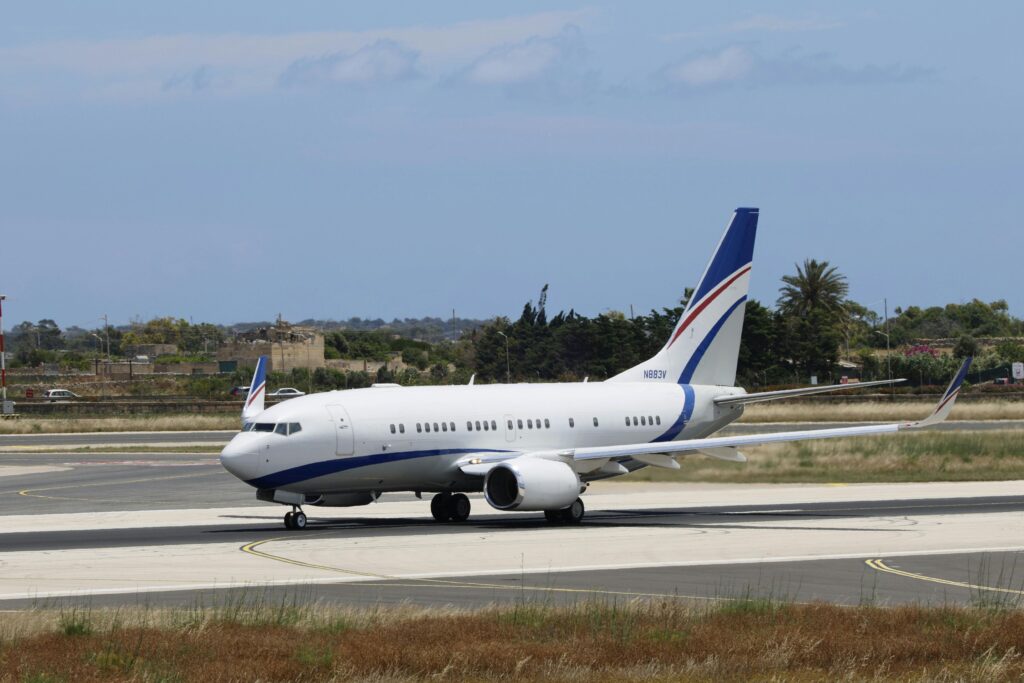
- The VIP Standard: For missions exceeding 6 hours, the BBJ or ACJ provides unparalleled facilities, including master bedrooms, en-suite showers, and dedicated boardrooms, essential for principals arriving for high-stakes engagements.
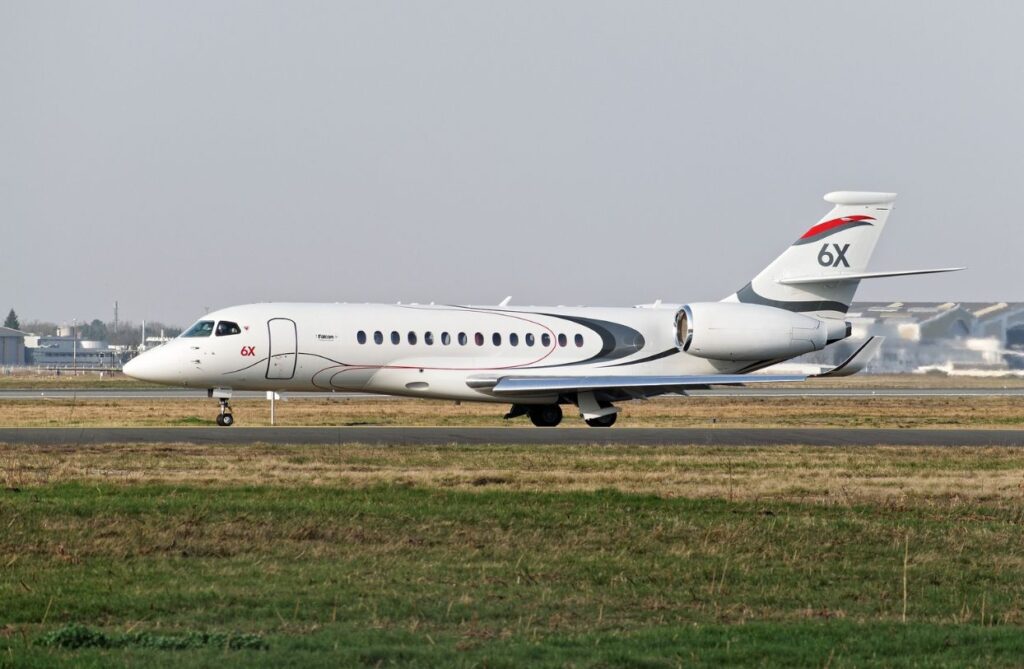
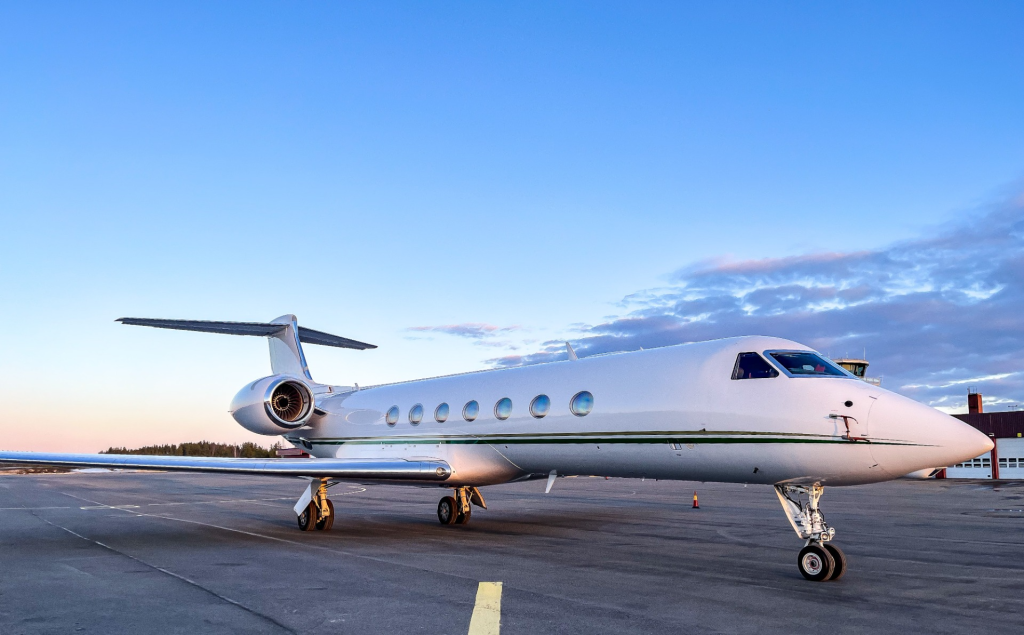
FA Jets Route Tip: The Global 7500 or ACJ319neo For a Heavy Jet experience, the Global 7500 is the ultimate choice, offering four living spaces and Smooth Flex Wing technology for maximum stability. If you require more space, the ACJ319neo provides the widest cabin in the sky, featuring a private master suite and a large lounge perfect for preparing for high stakes engagements before landing in Dubai.
Paris (Le Bourget) to Mykonos
- Light Jet (4-7 pax): From €25,050 (One-way estimate)
- Midsize Jet (6-9 pax): From €26,000 (One-way estimate)
- Super-Midsize (8-10 pax): From €29,050 (One-way estimate)
Performance: Mykonos is famous for the Meltemi winds. While Light Jets can land here, larger and heavier airframes provide significantly better stability during the final approach in turbulent conditions.
FA Jets Route Tip: The Praetor 500 or Challenger 3500 We highly recommend the Praetor 500 for its exceptional stability and runway performance in the windy Cyclades. It offers a spacious stand up cabin that rivals larger jets. For larger groups the Challenger 3500 is the premier choice as its advanced wing design specifically softens turbulence, ensuring a smooth and comfortable arrival for your island getaway.
London (Farnborough) to Geneva (Ski Season)
- Turboprop (6-8 pax): From €8,250 (One-way estimate)
- Light Jet (4-7 pax): From €9,950 (One-way estimate)
- Midsize Jet (6-9 pax): From €18,950 (One-way estimate)
Winter Logistics: The main challenge for this route is not the distance, but the volume of luggage. Ski gear and heavy winter wardrobes require an aircraft with a spacious, dedicated baggage compartment. Selecting a jet with an external access door ensures that the cabin remains uncluttered and luxurious, while providing the necessary length to accommodate skis and snowboards safely.
FA Jets Route Tip: The Phenom 300E or Pilatus PC-12 The Phenom 300E is the undisputed champion for ski trips because of its massive external baggage hold for skis and suitcases. For family groups seeking maximum efficiency we also recommend the Pilatus PC-12. Its large cargo door makes loading heavy winter equipment effortless and it can access smaller regional airports closer to the resorts if Geneva is fully booked.
Zurich to Munich (Intra-DACH)
- Very Light Jet (4 pax): From €5,900 (One-way estimate)
- Light Jet (6-7 pax): From €8,000 (One-way estimate)
- Turboprop (6-8 pax): From €6,100 (One-way estimate)
Efficiency: On flights under 45 minutes, the time difference between a jet and a turboprop is negligible. The goal here is to use smaller airports like Oberpfaffenhofen to bypass the main terminal delays. For highly efficient short distance travel, you can also consider an Air Taxi service to access up to 1600 airports across Europe.
FA Jets Route Tip: The Citation Mustang or King Air B200 For this short leg we recommend the Citation Mustang for 1 to 3 passengers looking for maximum cost-efficiency. It gets you from boardroom to boardroom in under an hour. For larger teams of up to 8 people the King Air B200 is the gold standard, offering a spacious club seating arrangement perfect for a quick mid-air briefing before your meeting in Munich.
The “Empty Leg” Reality: High Risk vs. High Reward
While “Empty Legs” are often marketed as a way to save up to 75% on charter costs, they come with significant operational caveats that often make them unsuitable for professional or time-sensitive travel.
What is an Empty Leg? An empty leg occurs when an aircraft needs to fly “empty” to reposition for its next scheduled charter or return to its home base. For a detailed breakdown of how this works, you can read our full guide on empty leg flights.
The Strategic Risks:
- Fixed Parameters: An empty leg follows a pre-determined schedule. There is no flexibility regarding departure times or locations.
- Dependence on the Primary Charter: If the original full-price client cancels or modifies their flight, your empty leg is automatically voided.
- Reliability Concerns: Because an empty leg offers no guarantee of flight recovery, it is generally considered unsuitable for mission-critical business travel where arrival times are non-negotiable.
The 2026 Fee Breakdown: What’s in the Invoice?
In the European theater, ancillary fees can account for 15-25% of the total charter price. FA Jets maintains a policy of all-inclusive quoting to eliminate “invoice shock.”
- Repositioning Fees (Repo): Costs incurred to fly the aircraft from its home base to your departure airport.
- Crew Overnight & Per Diems: If the aircraft stays at the destination, the client covers crew accommodation and meals.
- VAT Implications: Domestic routes within certain EU countries may attract local VAT.
- Broker Fees: A transparent service fee for the sourcing and management of your flight.
- Payment Surcharges: It is important to note that Credit Card payments often come with extra transaction fees, both for the initial charter cost and any post-flight adjustments (such as catering upgrades or de-icing).
- Ground Transport: Additional costs for chauffeur services before and after the flight.
- Airport & Handling (FBO) Fees: Premium hubs like Paris Le Bourget or Geneva charge significantly higher rates than regional alternates. The Monopoly Effect: Unlike the United States, where multiple FBOs often compete at a single airport, many European hubs operate with only one authorized handler. This lack of competition leads to fixed, higher landing and handling fees. VIP Airliners (BBJ/ACJ) incur higher fees due to their MTOW (Maximum Take-Off Weight).
Regional Levies:
- French TSBA: This solidarity tax has seen a significant increase in 2026.
- Italian Birgi Tax: A per-passenger luxury levy for all Italian arrivals/departures.
De-Icing: A variable winter operational cost. Should an aircraft require de-icing, the costs (fluid and labor) are billed back to the client, typically ranging from €1,500 to €12,000+ depending on aircraft size.
Strategic Cost Optimization
How do you maximize the value of your aviation budget?
- Secondary Airports: Using London Biggin Hill instead of Farnborough, or Cannes instead of Nice, can save thousands in fees and often puts you closer to your final destination.
- Right-Sizing: Avoid the “ego-trip” of booking a Heavy Jet when a modern Midsize or Super-Midsize aircraft (like the Praetor 600) can handle the range and passengers with equal comfort.
- All-Inclusive Quoting: Demand a quote that includes crew per diems, overnight fees, and Wi-Fi. Many “low” estimates hide these costs in the fine print.
Conclusion: Data-Driven Luxury
Understanding the cost of a private jet in Europe is the first step toward a seamless travel experience. While these 2026 benchmarks provide a foundation, the most accurate pricing comes from real-time market assessment.
At Fa Jets, we combine global reach with local European expertise to ensure your quote is as precise as your flight plan.
Get Your Guaranteed 2026 Price Quote
Stop guessing and start planning. Our advisors are ready to provide a transparent, all-inclusive quote for your next mission.
Frequently Asked Questions (FAQ)
Yes. Demand for Mediterranean hubs like Ibiza and Mykonos peaks between June and August. We strongly recommend booking as early as possible to secure airport parking and avoid the high costs of aircraft repositioning. Early booking ensures you lock in the best airframes at standard rates before peak-season availability becomes limited.
Our 2026 quotes are fully aligned with the latest SAF mandates. Upon request, we provide official SAF certificates and carbon offset documentation that can be directly integrated into your company’s annual ESG report. This transparency allows you to demonstrate measurable progress toward sustainability targets and ensures compliance with corporate social responsibility standards.
Absolutely. Private aviation is the most comfortable way to travel with pets, as they can join you in the cabin rather than the hold. Most Light and Midsize aircraft are pet-friendly, provided you have a valid pet passport and required vaccinations for your destination. A professional cleaning fee is typically applied to maintain the cabin’s pristine condition. For a full guide on regulations and documentation, read our dedicated blog on pet travel here.
To receive a precise, all-inclusive quote, you should provide your broker with the exact number of passengers, your preferred departure times, and total luggage weight. This allows us to right-size the aircraft and calculate exact landing fees and handling charges for your specific mission. At Fajets, we provide transparent quotes that include all repositioning and crew costs upfront to avoid any post-flight surprises.
Yes, empty legs are frequently available on popular routes like London-Nice or Paris-Geneva. While these flights offer a more efficient entry point into private aviation, it is important to note that pricing remains reflective of the premium nature of the service.
Empty legs are best suited for flexible travelers, as they depend entirely on the schedule of a primary charter and can be cancelled if the original client changes plans. For mission-critical travel where reliability is paramount, we always recommend a full-charter solution. You can learn more about how these flights work in our detailed guide to empty legs.
The beauty of private aviation is its flexibility. In many cases, we can have an aircraft ready for takeoff in as little as 4 hours, provided the airport is open and the crew is available. Please note that the final lead time often depends on the specific location of the aircraft relative to your departure point.
For the best pricing and selection, booking 2 to 4 weeks in advance is standard. However, for peak seasons—such as summer in Ibiza or the winter ski season in Geneva—we recommend booking 8 to 12 weeks ahead. This ensures you secure your preferred departure slots at high-demand airports where ramp space and parking are strictly limited.